



Academic advising
Academic Advising supports your success from the time you apply through graduation. Your assigned advisor helps you explore programs, create an academic plan, stay on track toward graduation and prepare for transfer or your next career step. Students enrolled in for-credit programs are assigned an academic advisor based on their career pathway. If your program of study changes, your advisor may also change. Students in Career & College Promise and Continuing Education programs follow separate advising processes.
How an advisor can help
Your academic advisor can help you:
- develop an academic plan
- choose courses that fit your program
- understand degree requirements
- explore or change your major
- prepare for graduation
- connect with campus resources
- plan to transfer to a four-year college or university
- sign up with a guaranteed admissions partner
- understand registration requirements
Advising is required before registering.


Schedule an appointment
- Log in to MyConnect.
- Locate your assigned advisor.
- Select Schedule a Meeting.
- Choose an available virtual, phone, or in-person appointment.
Grading policies
Term GPA is a combined GPA or grade point average of all grades you have earned in a semester or term.
Cumulative GPA is the overall GPA or grade point average of all cumulative GPAs you have earned in all semesters and all the courses in an academic term.
You are required to maintain a cumulative and term 2.0 GPA, as well as the 67% completion rate requirements, based on calculations at the end of the term, to be in Financial Aid SAP Good Standing.
Program GPA, rather than cumulative GPA, is used for graduation.
As long as the program GPA is at least 2.0, you are eligible to graduate. For certain programs, grades of C or better in certain courses may be required to receive degrees, diplomas or certificates.
If you are planning to transfer, schools will be looking at cumulative GPA. If you are under a 2.0 cumulative GPA, you will not be eligible for consideration of admissions by any UNC System schools.
Academic Advising can help you find resources that support your academic and personal success. If you are struggling to maintain a 2.0 or higher GPA and, for financial aid, 67% or higher completion rate, talk with your instructors and your academic advisor about resources and strategies for academic success this term.
Registration
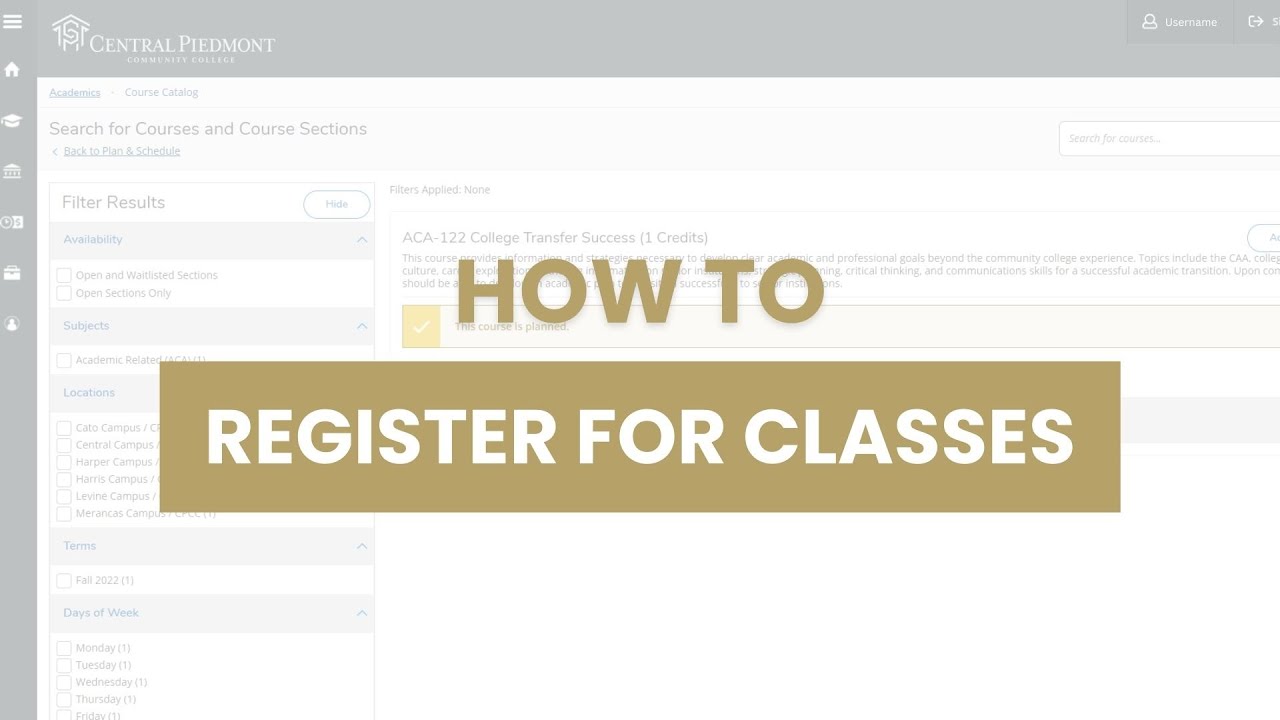
After you apply, complete orientation online and meet with an academic advisor, you can register for courses online in MyCollege. Your registration is complete only after you pay your balance. If you don't drop a class before it starts, you're responsible for payment — even if you don't attend.
Registration deadlines
- One 12-week session
- Two 8-week sessions
- Four 4-week sessions
- One 4-week session held over winter break
- One 12-week session
- Two 8-week sessions
- Four 4-week sessions
- One 8-week session
- Two 4-week sessions
Registration policies
Full-time enrollment:
- Fall or spring: 12 credit hours
- Summer: 9 credit hours (12 for financial aid)
Taking more than a full-time load requires approval. Tuition is capped at 16 credit hours per semester, even if you take more classes.
If a class is full, you can join a waitlist and will receive an email if a seat opens. You must register within 24 hours to maintain your spot.
You can add classes (if space is available) through the first two days of the term or session.
You can drop classes:
- Before the 10% point of the class: no record on your transcript
- Between 10% and 35%: class appears as a W (withdrawal)
- After 35%: special approval is required
Be aware that if you drop a class on or after the start date, you will only receive a partial refund. Learn more about refunds.
Military students called to active duty may drop classes without academic or financial penalty.
If you can't complete a class, you must officially withdraw to avoid a failing grade. A W stays on your transcript but does not affect your GPA.
Note: withdrawals may impact financial aid.
Audited classes do not earn credit or grades and are not covered by financial aid. They appear on your transcript as AU.
Note: some courses may not be eligible for audit or may require permission.
Not finding the course you need?
The application process is entirely online. Registration procedures at each institution may vary. An application, more information and member institutions are available at greatercharlotteconsortium.org.
