
Statistics
Hands-on training
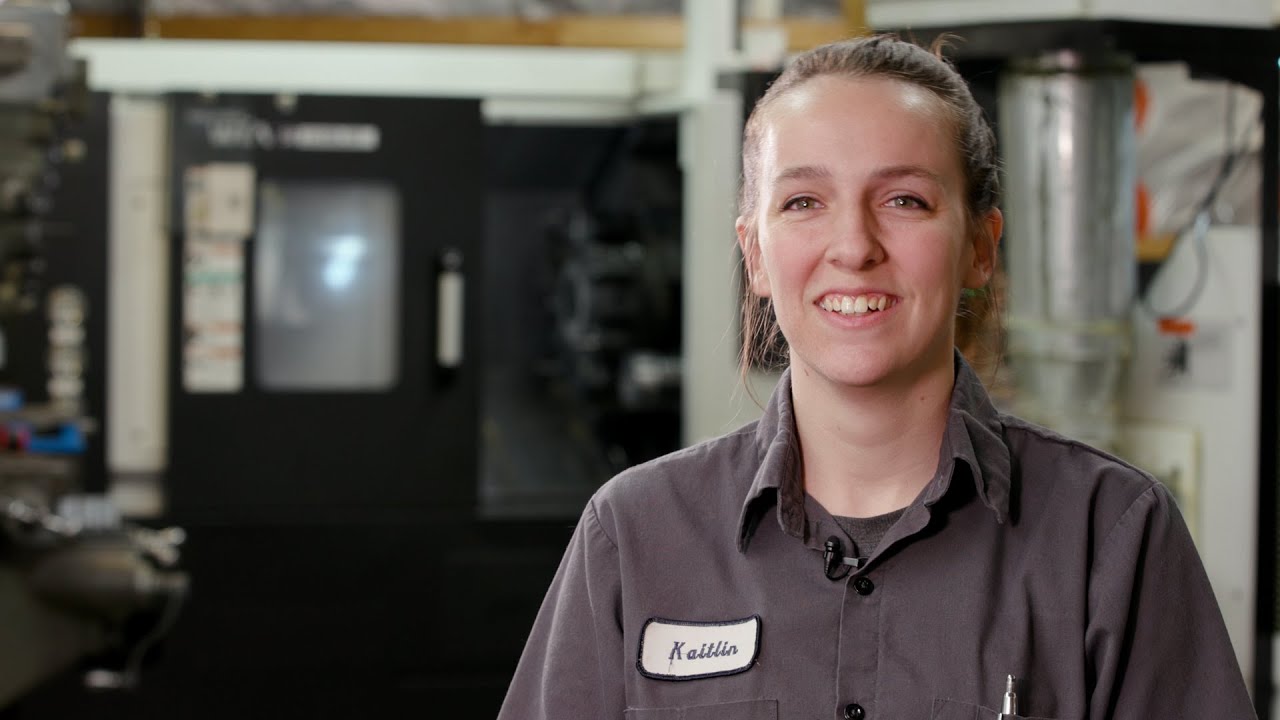
Practice skills using real machine tools in a modern manufacturing lab.
Advanced technology
Work with CNC mills, CNC turning, CAD, CAM and multi-axis machining.
Career-focused skills
Learn job-ready techniques used in today’s manufacturing workplaces.
Evening options available
Many courses are offered at night to fit work and life schedules.
Let's map out your next move together.
About the Computer-Integrated Machining Technology program
The Computer-Integrated Machining Technology program will prepare you for today’s advanced manufacturing industry. Training includes manual machining, CNC operations, blueprint reading, and precision measurement. Courses focus on practical skills used in modern production environments, helping graduates enter the workforce with confidence.
What you'll learn
You will gain experience with:
- manual mills and lathes
- CNC milling and turning
- blueprint reading
- metrology
- CAD and CAM
- multi-axis machining
Instruction focuses on accuracy, safety, and problem-solving used in advanced manufacturing settings.
Central Campus: Engineering division info session
Frequently asked questions
Machining is a process where machines shape raw materials into parts. It can be done manually or with automated machines like CNC systems.
Computer-Integrated Machining uses computer-controlled machines and software to make parts faster and more accurately. It includes:
- CNC machines: controlled by software to cut, drill, or shape parts
- CAD (Computer-Aided Design): used to design parts
- CAM (Computer-Aided Manufacturing): converts CAD models into instructions for CNC machines
In short, Computer-Integrated Machining is a modern, high-tech version of machining. It uses software and automated machines for faster, more accurate production.
1. CNC machines
- CNC milling machines – to cut and shape flat or complex surfaces
- CNC lathes – to make round or cylindrical parts
- CNC plasma/laser cutters – for high-precision cutting of metals or other materials
- EDM (Electrical Discharge Machines) – for intricate, detailed work
3D printers
2. Software tools
- CAD (Computer-Aided Design), such as Solidworks and AutoCAD
- CAM (Computer-Aided Manufacturing), such as MasterCAM and Autodesk Fusion
- CNC Simulation Software, such as Vericut
3. Measuring tools
- Coordinate Measuring Machine (CMM)
- 3D optical scanner
- Hand tools, such as calipers and micrometers
Yes. Most courses are offered in the evening. If a class is not available one semester, it is often offered the next.
Classes typically begin in the fall or spring semester.
Accreditation information