
Statistics
Bilingual formatting
All courses support Spanish-first speakers and foster cross-cultural competence.
Work/life balance
Multiple learning formats and course length offerings for flexible learning.
Practice opportunities
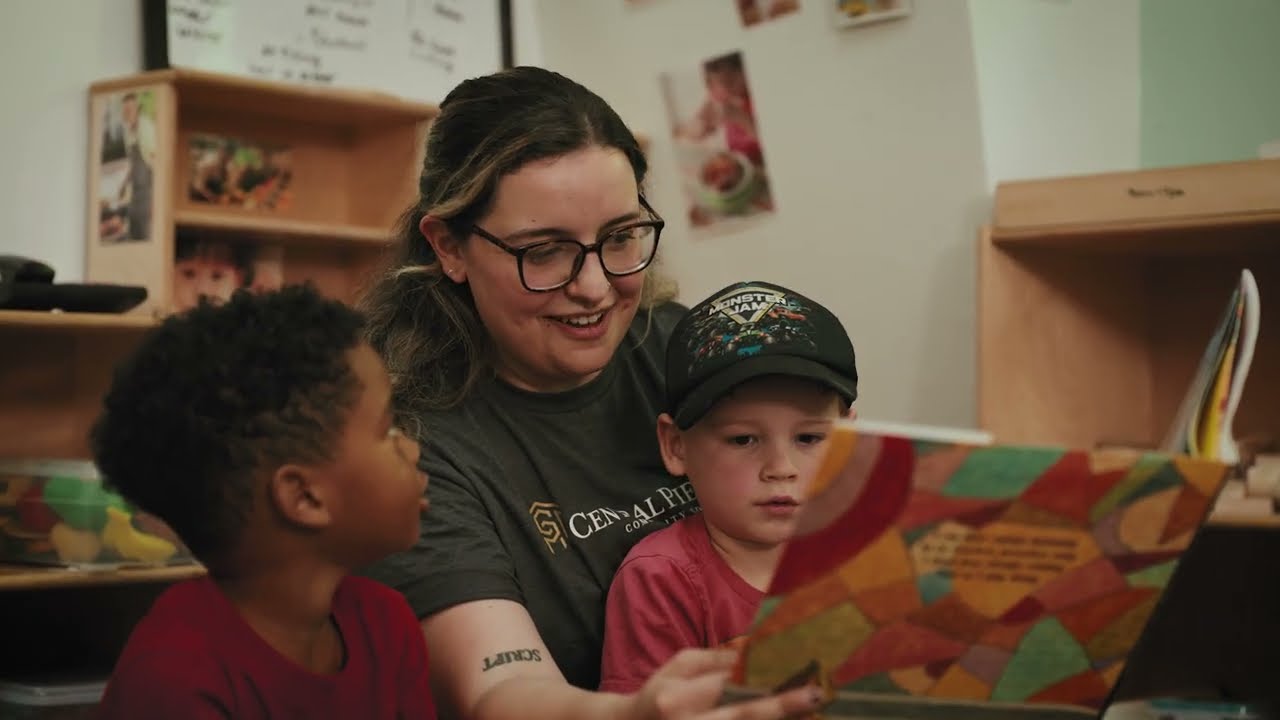
Apply your learning by working with children under the guidance of experienced teachers.
Experienced faculty
A well rounded team of experts in a variety of areas will teach you.
Let's map out your next move together.
About the Early Childhood Education – Transfer Non-Licensure program
The Early Childhood Education program prepares you to work with children from birth through middle childhood. Students combine learning theories with practice under the supervision of qualified teachers.
The Associate in Applied Science in Early Childhood Education – Transfer Non-Licensure degree is best for students planning to transfer to a four-year college or university, and who do not plan to pursue birth-kindergarten (B-K) licensure.
What you'll learn
Program faculty participates in regular, evidence-based feedback cycles. This enables them to teach methodologies that are based on the science of teaching.
Once you finish our program, you will be able to:
- create respectful, supportive, and challenging environments that promote every child’s learning and development
- encourage families' involvement in their child's development
- create relationships between families, early childhood professionals, and the community
- assess children's development
Frequently asked questions
Early Childhood Education students are eligible to apply for the Sylvia Ingram Eagle Scholarship and the Early Childhood Pathway Scholarship, both available in the scholarship portal.
With an Associate in Applied Science in Early Childhood Education - Professional degree, you can get right to work in early childhood education classrooms as a lead pre-school teacher, as a preschool assistant teacher in a public pre-K program, or as an NC Level 2 Administrator in early childhood education programs alongside the following credentials:
Lead Teachers – The North Carolina Early Childhood Credential (NCECC)
Students must successfully complete EDU 119 (four semester credit hours) with a grade of C or better in to earn the NCECC, sometimes called “Credentials” or “Credentials 1 and 2." The NCECC is required to be a teacher in a childcare center.
Administrators – The North Carolina Early Childhood Administration Credential (NCECAC)
Students must successfully complete two required components: administration and additional early childhood/child development coursework. All administrative coursework must be completed with a grade of C or better. Level I is the minimum level required by law for all childcare administrators. Levels II and III are voluntary.
- Level I: Six semester credit hours of administration coursework (two courses) plus seven semester credit hours of early childhood education coursework
- Level II: Six semester credit hours of administration coursework (two courses) plus an associate in early childhood education OR an associate degree in any field plus 12 semester credit hours in early childhood education
- Level III: Six semester credit hours of administration coursework (two courses) plus a bachelor's degree in early childhood education/child development OR a bachelor's degree in any field plus 18 semester credit hours in early childhood education
Teachers of School-Age Children - The North Carolina School-Age Child Care Credential (NCSACCC)
Students must successfully complete EDU 145 and EDU 235 OR EDU 145 and EDU 263 with a grade of C or better to earn the NCECAC.
Both the transfer non-licensure and transfer licensure tracks are good options for students who plan to transfer to a four-year institution and earn a bachelor’s degree in early childhood education. The professional track is best for those students who wish to enter the workforce immediately after graduation.
About practicum
The Early Childhood Education program practicum (EDU 284 Early Childhood Capstone Practicum) is designed to introduce you to early childhood classroom settings and to prepare you for classroom teaching.
EDU 284 requires you to work in a childcare setting for nine hours per week (144 hours per semester). Students who are currently working in childcare may complete their hours during their regular workday. You will work under the supervision of experienced mentor teachers and faculty. In addition, you will be required to participate in a weekly or bi-weekly seminar.
Practicum enrollment information will be communicated ahead of the registration period, beginning in October for the spring semester and in March for the fall semester. An announcement will be posted on Brightspace and faculty advisors will also email relevant information to current program students.
Practicum: frequently asked questions
To enroll in EDU 284, you must:
- be enrolled in the Associate in Early Childhood Education program
- have a minimum 2.5 GPA in the program and a minimum 2.0 GPA overall (must maintain GPA)
- successful complete EDU 184
- complete all degree-required EDU courses (excluding EDU 271 - Educational Technology, which may be taken concurrently with the practicum course)
- verify eligibility with your faculty advisor
- submit the DCDEE qualifying letter, TB test, and health assessment form (completed by the student)
Please note that eligibility for EDU 284 does not guarantee a seat, as spaces are limited.
- Confirm your eligibility.
- Attend an information session (you will receive an email from the program about attending a scheduled practicum information session).
- Complete a practicum application.
- Register for EDU 284 (you will receive an email from the program informing you which practicum section to register for).
The practicum experience is designed to provide you with an opportunity to apply what you have learned in the program. Practicum I has three lab hours and Practicum II has nine lab hours per week in assigned childcare centers. The instructor will visit the practicum site(s) to observe and evaluate your interactions with children per the course competencies.
The class meets for two hours every other week to provide students with an opportunity to discuss their practicum experience. You may also be required to complete various practicum related assignments.
The Early Childhood practicum coordinator, in cooperation with the Early Childhood faculty, selects various sites throughout the Charlotte region to serve as “placed sites.” To be considered, a site must have a minimum three-star rating and/or NAEYC accreditation and teachers with, at minimum, associate in applied science degrees in early childhood who can serve as mentor teachers. Every effort is made to locate high-quality settings that are consistent with our program’s philosophy.
You are not paid for your participation in practicum-placed sites. Practicum experiences are a required aspect of the associate in applied science degree program and of the Early Childhood Associate Program Specialization Certificate. Four semester credits are awarded upon successful completion of practicum.
Practicum grades are determined on the basis of how well you achieve the competencies of the course. Practicum grades are determined and assigned by the faculty instructor.
Once the practicum coordinator has assigned/approved your practicum site(s), you should contact your mentor teacher to introduce yourself. An initial pre-practicum visit to the placed site is recommended. You are required to make your first official practicum visits during the first week of the semester.
Accreditation information