

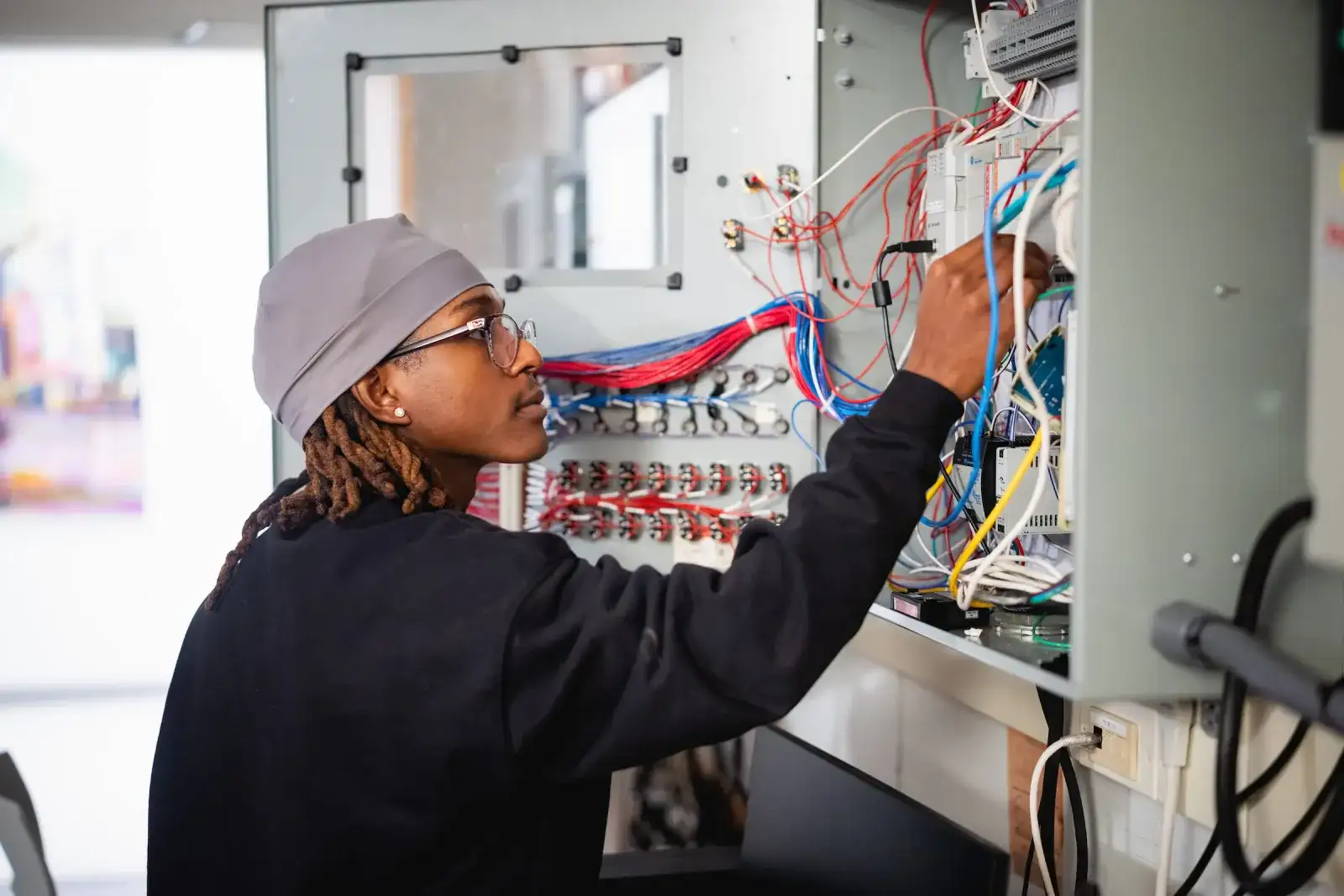
Electrical Systems Technology (A.A.S.)

The Electrical Systems Technology degree trains you to install and maintain electrical systems found in residential, commercial and industrial facilities.

Electrical systems technology degree
Associate in Applied Science
Outcome
Two academic years
Duration
Hybrid
Learning Format
Harper Campus, Levine Campus, Central Campus, Online
Location

Statistics

State-of-the-art equipment

The Electrical Systems Technology lab is outfitted with cutting edge technology.

Dedicated instructors

Learn from faculty who are passionate about what they teach.

Practical experience

Internships and apprenticeships offer hands-on learning.

Career readiness

In just two years, start your career.

Let's map out your next move together.

About the programs

About the Electrical Systems Technology program

If eligible, you can take part in paid, work-based learning while in school. In addition to regular coursework, you will work with an employer for a semester in an electrical systems role. Participation helps students gain the on-the-job experience needed to qualify for the Electrical Contractor License exam.

Graduate with an Associate in Applied Science degree and you’ll be ready for entry level careers in the electrical field.

Career Outlook for Electrical Systems Technology (A.A.S.)

This Career Outlook combines extensive labor market data to help you evaluate the careers that match your strengths and interests, and where those careers are thriving. Please explore the national, state, and regional data, as you compare the careers related to Electrical Systems Technology (A.A.S.).

Geographic Region

Please enter your zip code to view the targeted region or state-level data.

Region CHARLOTTE, NC
Loading career data…

Occupations

Showing list of job titles from most popular to least.

Frequently asked questions

Not exactly. Professionals in electrical systems technology primarily work with installation, practical applications, applied design, system implementation and maintenance. In contrast, electrical engineers tend to concentrate more on theoretical principles, research, analysis and conceptual system design.

To become an electrician in North Carolina, you will need to:

Take the next step your way. Apply today or plan your path with help.