
Cytotechnology

Study cells at the microscopic level and prepare for a specialized laboratory career focused on detecting disease and supporting patient care.

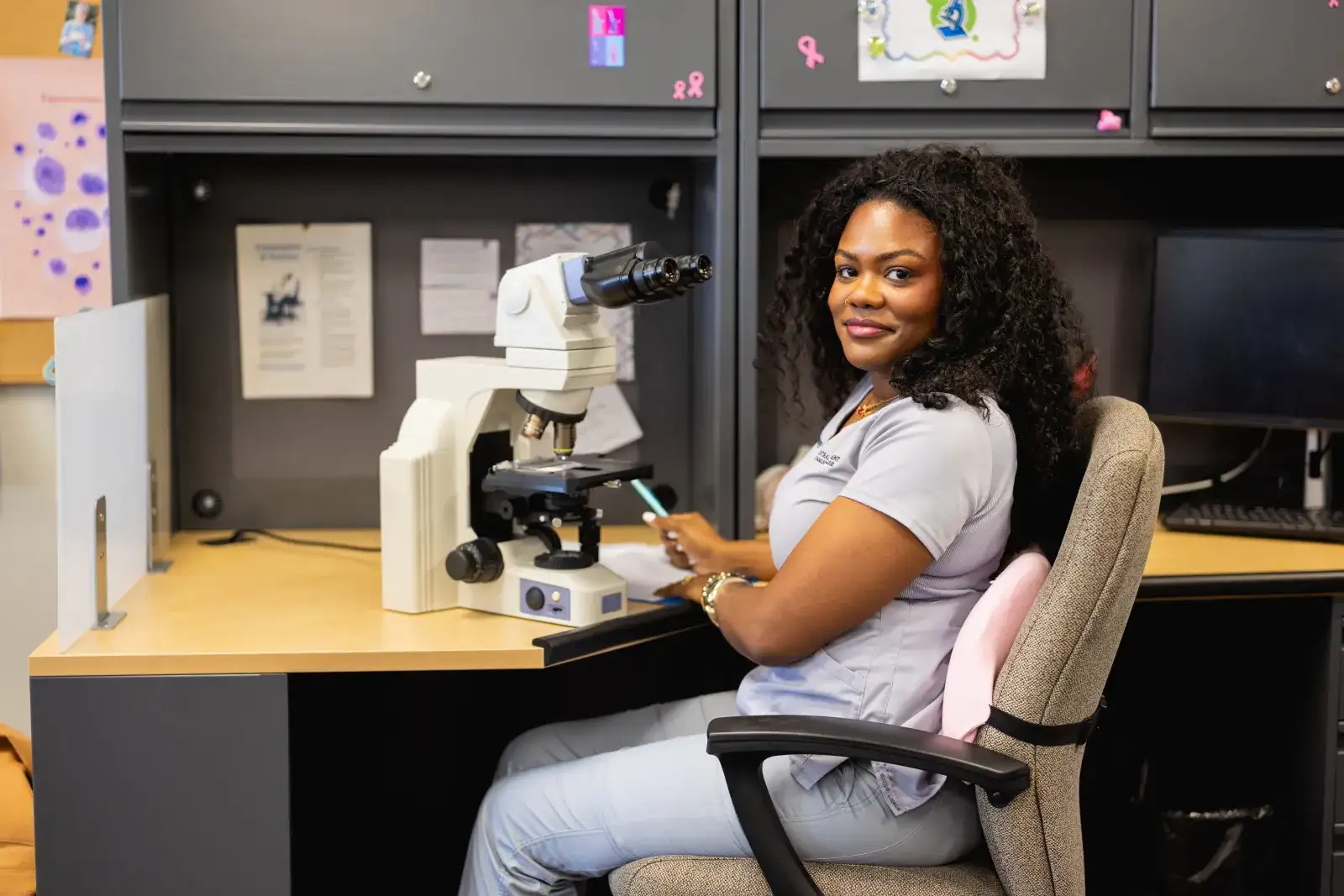
Student at a desk wearing medical scrubs and sitting behind a microscope turned toward the camera and smiling
Certificate
Outcome
One year
Duration
On-Campus
Learning Format
Central Campus
Location
Statistics

One of a kind program

This is the only cytotechnology program offered at a community college in the United States.

Post‑baccalaureate focus

Designed for students who already hold a bachelor’s degree.

Hands‑on clinical training

Get real laboratory experience across North and South Carolina.

Strong career outlook

High demand, competitive salaries and strong job placement.

Let's map out your next move together.

About the programs

About the Cytotechnology program

Cytotechnology is the study of cells to detect disease. This post‑baccalaureate program prepares you for entry‑level cytologist roles through hands‑on lab work and clinical training. Our students examine cells to identify infections, benign conditions and cancer-related changes. Experienced faculty guide learning in a focused, professional environment.

Career Outlook for Cytotechnology

This Career Outlook combines extensive labor market data to help you evaluate the careers that match your strengths and interests, and where those careers are thriving. Please explore the national, state, and regional data, as you compare the careers related to Cytotechnology.

Geographic Region

Please enter your zip code to view the targeted region or state-level data.

Region CHARLOTTE, NC
Loading career data…

Occupations

Showing list of job titles from most popular to least.

Frequently asked questions

Cytotechnology is the study of cells under a microscope to help detect disease and guide patient care. 

Applicants who hold a bachelor’s degree and enjoy detailed laboratory work are encouraged to apply

It takes three semesters to complete this program and can be done within one academic year.

Graduates qualify for entry‑level cytologist roles after certification.

ItemDescriptionIn State StudentsOut of State Students
TuitionWithout General Education Courses (refer to note 1)$2,888$10,184
BooksWithout General Education Courses$1,596$1,596
Activity FeePaid each semester at registration - $26/semester if taking 8 credit hours or less; $35/semester if taking 9 credit hours or more$96$96
Tech FeePaid each semester at registration - $48/semester$144$144
CAPS FeeCampus Parking - $80/semester if taking 8 credit hours or less; $107/semester if taking 9 credit hours or more$288$288
Lab FeeIncluded in Course Registration - $27/lab hr. or $216 max/semester$432$432
Accident InsuranceRequired for program - $1.60/semester$5$5
Liability InsuranceRequired for program - $8.70/semester$26$26
UniformsFor clinical affiliations only$275$275
Physical Exam and ImmunizationsOne time upon admission to program - See Note 2. Immunizations as requiredvariablevariable
Criminal Background Check and Drug ScreeningOne time - required for clinicals$115$115
Clinical Affiliation Out of TownOne semester only (approximate cost). (refer to note 6)variablevariable
Graduation FeeOne time fee$20$20
Pinning FeeOne time fee$30$30
Licensure FeeAfter graduation$250$250
TotalWithout General Education Courses$6,165$13,461

Notes

  1. Learn more about tuition and payments.
  2. The Central Piedmont student price for a physical exam is $49 at our on-campus Community Based Virtual Clinic.
  3. Tuition, books, some fees, accident insurance, and liability insurance may be eligible for coverage with financial aid.
  4. All costs have been rounded to the nearest dollar.
  5. All costs are estimates and are subject to change.
  6. Rate based on AHEC cost; can use CSA funds.

Take the next step your way. Apply today or plan your path with help.