
Accelerated Career Training (ACT)

Transform your future and gain the skills for a high-growth career through the Accelerated Career Training program, a tuition-free pathway designed to move you quickly into the workforce with dedicated coaching and professional support.

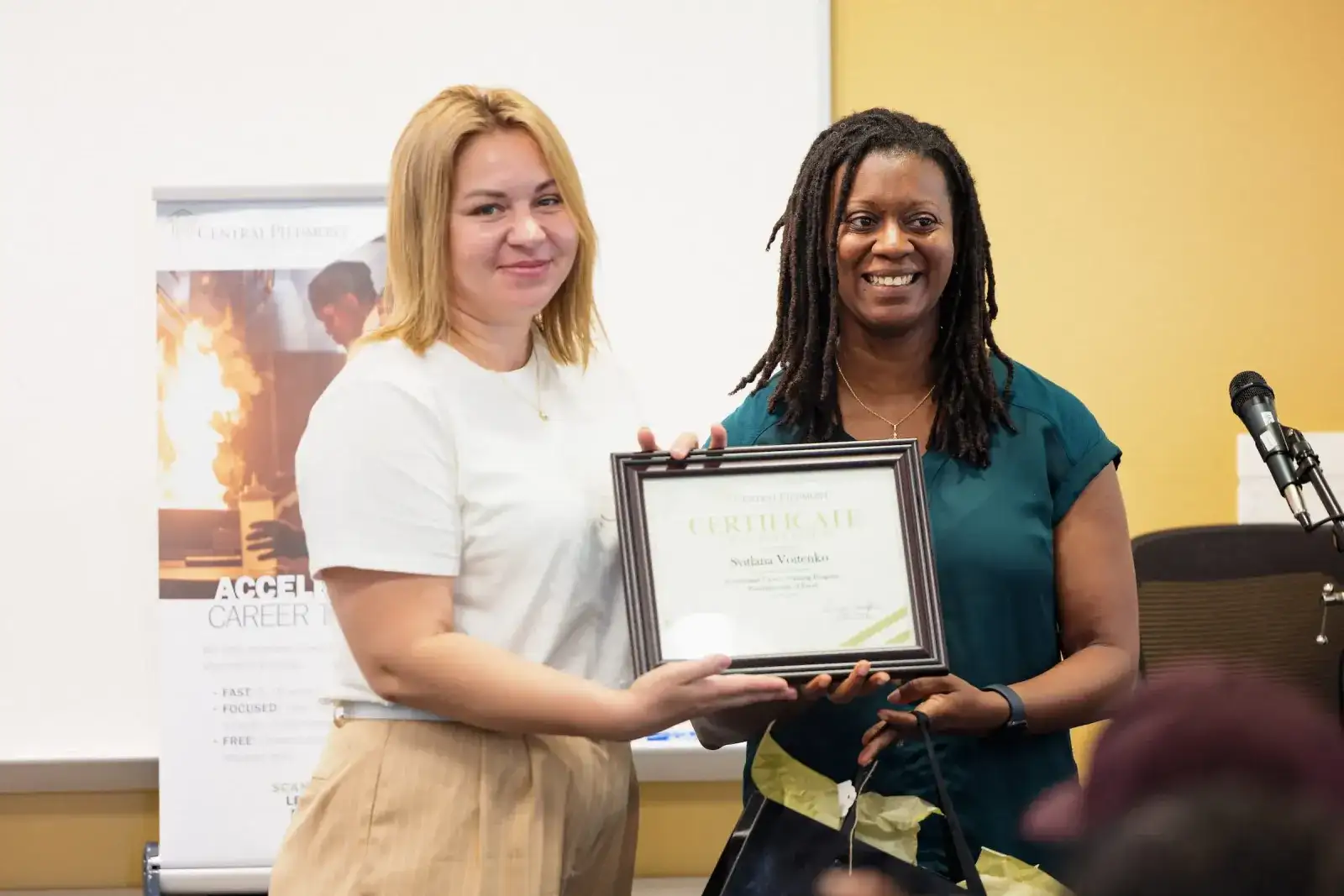
Graduate receiving a framed certificate at an awards presentation
Short-Term Training or Professional Certificate
Outcome
16 weeks or less
Duration
Hybrid, In Person
Learning Format
Cato Campus, Central Campus, Harper Campus, Harris Campus, Merancas Campus
Location

Statistics

100% tuition-free

This program covers all required costs, including tuition, books, fees, and essential services, ensuring your path to a new career is financially accessible.

Fast track to success

You receive personalized guidance to navigate your career path and support to manage day-to-day life challenges while you study.

Rapid workforce entry

You don’t have to wait years to start your career with programs lasting as few as nine weeks.

Essential soft skills training

Beyond technical expertise, you will master the professional habits employers value most.

Let's map out your next move together.

Patient discussing insurance options with two staff members in an office

About the Accelerated Career Training program

The ACT program offers training to help adults earn credentials and start careers in high-demand fields. The program ensures you are not just “job-ready” but “career-ready,” training you for employment in high-demand fields.

The key differences between ACT programs and similar Continuing Education courses are:

  • Classes are free through ACT
  • ACT students can access a Career Success Coach who will help you decide on your career path
  • Transportation assistance is available to ACT students
  • ACT students must take Working Smart: Soft Skills for Workplace Success classes
  • Support such as transportation assistance and guidance to overcome barriers is available.

How to enroll

Pathways

Fundamentals of Food

Gain hands-on experience with cooking and sanitation practices in a commercial kitchen. You will learn kitchen safety and sanitation, knife skills, and many foundational cooking methods. You will also become comfortable using typical equipment in a restaurant kitchen. After completing this class, you will be prepared to work as a prep cook in the restaurant industry.

Line Cooking Fundamentals

Elevate your culinary skills by mastering line cooking in a food truck environment. You will refine your cooking speed, learn consistent portion and plating skills, and will plan and execute a menu from the Mobile Learning Kitchen food truck. This class will give you experience to work as a line cook in a restaurant or food truck.

  • Location: Central Campus
  • Course: HOS 7303 Line Cooking Fundamentals
  • Offered: Summer and Fall

Requirements:

  • You must have a ServSafe Manager certificate.
  • You should have one year of culinary work experience or have attended Fundamentals of Food, CUL 140 or similar course.

Early Childhood Education

Prepare to be a lead teacher in a preschool or daycare setting in this 16-week class. You will learn developmental milestones of children from birth to age 5. You will also gain experience in planning meaningful activities and lessons for children. By successfully completing this course, you will be eligible to be a lead teacher in a daycare or preschool.

  • Credential earned: NC Early Childhood
  • Credential Course: EDU 119
  • Location: Harris Campus
  • Offered: Spring, summer and fall semesters

Eligibility requirements

  • You must be a North Carolina resident.
  • You must be able to pass a criminal background check for employment.

Nurse Aide

This 16-week class provides training in personal care and nursing skills. You will learn how to measure vital signs and help adults with their activities of daily living, such as eating, toileting, walking, and dressing. When you complete this course, you can test to become a Certified Nurse Aide (CNA), which is a requirement for further nursing education.

Requirements

  • You must have a high school diploma or equivalent.
  • You must pass a criminal background check.
  • You will need to complete a drug screening, physical exam, and submit vaccination records to participate.

Phlebotomy

This 14-week course includes seven weeks of classroom training and seven weeks of clinical experience in collecting blood from patients. You will learn about safety and sanitation practices, human anatomy, and the components of blood. You will gain experience with calming patients and using different needles to successfully draw blood for processing at a lab.

  • Course: PBT 7001 Phlebotomy Technician
  • Credential: Certified Phlebotomist Technician
  • Location: Central Campus
  • Offered: Spring and fall semester

Requirements

  • You must have a high school diploma or equivalent.
  • You must pass a criminal background check.
  • You will need to complete a drug screening, physical exam and submit vaccination records to participate.

Emergency Medical Technician (EMT)

This fast-paced 16-week class teaches the skills necessary to provide emergency medical care at a basic level. You will learn anatomy and physiology, how to recognize signs of distress in each body system and how to assess and stabilize patients.

Requirements

  • You must have a high school diploma or equivalent with at least 10th grade level English and math skills.
  • You must be able to bend, stretch, kneel, crawl, and lift up to 125 pounds.

Information Technology

This fast-paced, 16-week classes will prepare you for entry level tech support roles and give you a leg up for further study in the IT or cybersecurity field. You will learn about hardware and software on computers and mobile devices, and about networking and internet security.

Requirements

  • You must have a high school diploma or equivalent.
  • You must have basic computer skills.

Air Conditioning, Heating and Ventilation (HVAC)

In these two 16-week classes, you will learn entry level skills to assist with repairs to air conditioning units. You will learn how to identify the components of air conditioning units, identify trade tools and instruments, and safely handle compressed gasses. After passing the EPA 608 exam, you will be able to purchase refrigerant to service HVAC units.

  • Courses: AHR 110 Intro to Refrigeration, AHR 160 Refrigerant Certification
  • Credential: EPA 608 Technician Certification
  • Location: Harper Campus
  • Offered: Spring and fall semesters

Requirements

  • You must have a high school diploma or equivalent.
  • You must be a NC resident.
  • You must be able to pass a criminal background check and drug screening.
  • You must have a valid driver’s license for employment.

Basic Auto Technician

Learn the fundamentals of car repair and prepare to work as an entry level auto technician in this 9-week class. In this course, you will learn to complete oil changes, tire rotations, light brake work, and multipoint inspections. You will be prepared to enter the workforce as a lube tech or a safety and emissions inspector.

  • Credential Received: NC Vehicle Inspection and Emissions Testing Inspector-Mechanic
  • Location: Levine Campus
  • Course: AUX-9503 Basic Automotive Technician
  • Offered: Spring and fall semesters

Requirements

  • You must have a NC driver’s license.
  • You must be comfortable working in an environment typical of a mechanic's garage.

Commercial Driving CDL-A

Gain hands-on experience driving tractor trailers and earn your CDL Class A license during this 10-week class. You will complete Entry Level Driver Training, learn how to do a pre-trip inspection, practice backing skills, and gain road experience in a truck. During the class, you will obtain all the necessary practical skills and have an opportunity to take your CDL Class A road test.

Requirements

  • You must have a valid NC driver’s license.
  • You must obtain an NC CDL Class A learners permit, DOT (Department of Transportation) physical, and DOT drug screen to participate.

No Upcoming Events

Check back soon for new listings

Frequently Asked Questions

Find answers to commonly asked questions about the Accelerated Career Training program.

Most ACT programs begin in the fall and spring semesters. Limited programs, such as Culinary and Early Childhood Education, may also be available during the summer.

Applications are typically due in May for fall classes and October for spring classes. Applying after the deadline may limit your training options until the next semester.

Attend an information session and keep an eye on your email. After the application deadline, selected applicants may be invited to complete additional screening and interviews.

No. The ACT Program is a one-time opportunity designed to help you quickly gain skills and enter the workforce.

Take the next step your way. Apply today or plan your path with help.